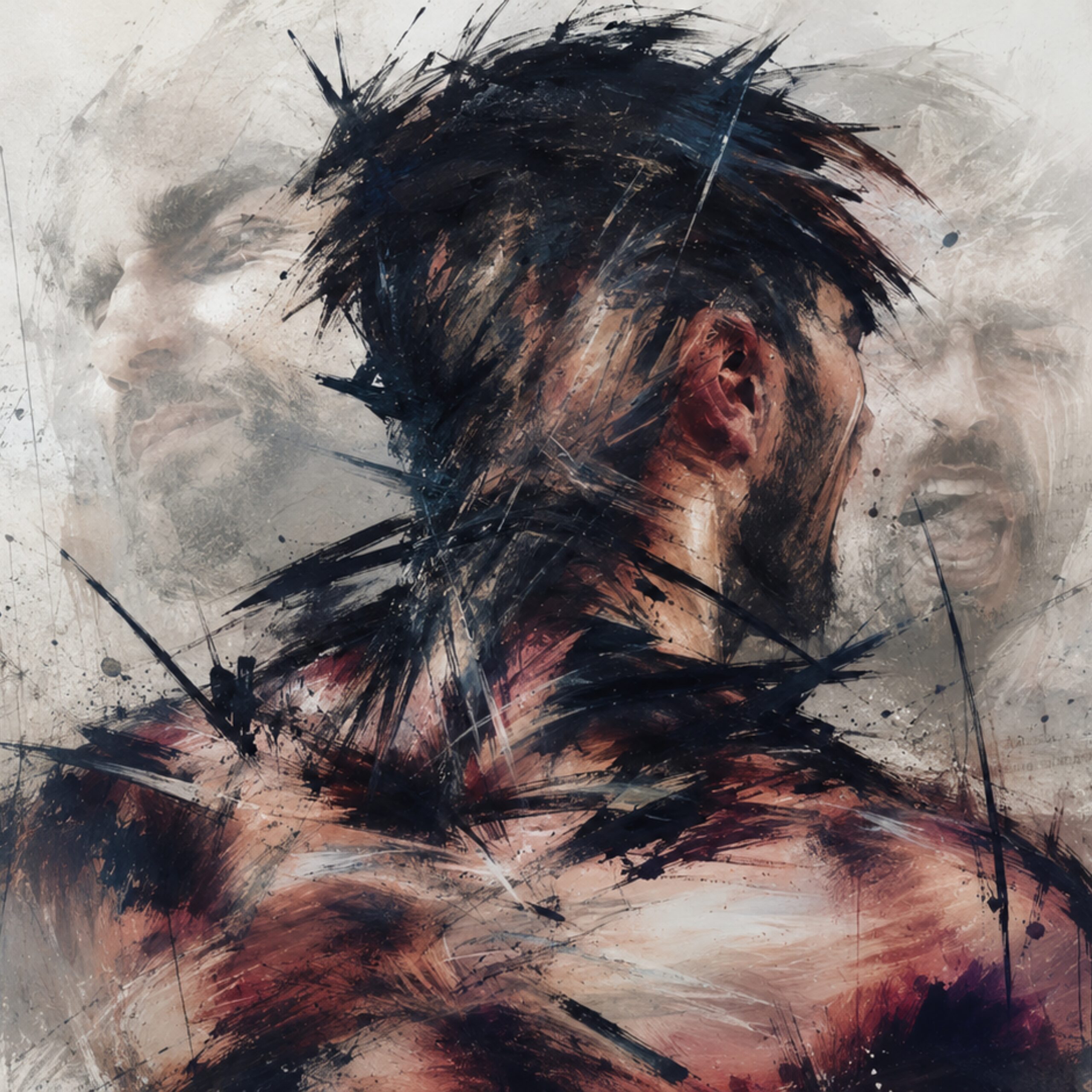
The Child Who Learned to Disappear
I do not know how to begin a story like this.
Perhaps because it is not simply a story.
It is my life.
Everything written here belongs to something real. These are not fragments of imagination or memories borrowed from someone else. They are the moments that shaped me, sometimes gently, but more often painfully. Every scar, every silence, every unanswered question became another piece of the person I would eventually become.
For as long as I can remember, I knew I was different.
Not better. Not worse. Just different.
Even before I understood what that meant, I felt disconnected from the world around me. Other children seemed to move through life with an ease I could not recognize. They belonged to their homes, their families, their games, their noise. I often felt as though I were watching life from the other side of glass, close enough to see everything, but never close enough to fully enter it.
My childhood did not begin in my mother’s arms.
I was not raised by my mother during my earliest years. Much of my childhood belonged to my older sister and to the neighbour who cared for me when no one else could. They became the hands that fed me, comforted me, watched over me, and kept me safe in the small ways children remember even when they cannot explain why those things mattered so much.
But when the day ended, everything became quiet.
Night was different.
Night belonged to loneliness.
I would lie in bed by myself, surrounded by darkness and silence. There were people living under the same roof, but sometimes that made the loneliness heavier, not lighter. It taught me that being alone and feeling lonely are not the same thing. A person can be surrounded by voices and still feel abandoned by all of them.
I was not my mother’s favourite.
At least, that is how it always felt.
No one had to say those words to me. Children do not always need words to understand what place they have been given. They notice who is held first. Who receives the warmest smile. Whose mistakes are forgiven quickly. Who gets defended before anyone asks what happened. Who gets praised for small things while another child learns to make every need smaller and smaller until it almost disappears.
I became very good at disappearing.
For years, I wondered what was wrong with me. Maybe I was not lovable enough. Maybe I was too quiet. Maybe I thought too much. Maybe I was simply not the son my mother had wanted. Children have an extraordinary ability to blame themselves for things they could never have caused.
Still, I never stopped wanting my mother’s approval.
One smile could stay with me for days. One compliment could erase weeks of sadness. Those tiny moments of affection felt enormous because they were rare. I collected them like a child collects small treasures, keeping them close because I never knew when another one would come.
But love and hurt can exist in the same heart. Sometimes they grow together until it becomes impossible to separate them.
Even now, I do not know everything my mother carried. I do not know what pain shaped my mother, what fear lived in my mother, or what burdens my mother fought in silence. Perhaps my mother loved me in the only way my mother knew how. Or perhaps my mother simply could not give what I needed.
I do not know.
What I do know is how it felt.
I felt invisible.
Yet somehow, despite everything, I was still my mother’s son.
The First Story Told About Me
I was different from my brothers too.
I was smaller than they were. Tiny. Fragile. People often noticed my size before they noticed anything else. On my father’s side of the family, I never truly felt accepted. Some of my siblings seemed to hate me before I was even old enough to understand why.
One story followed me throughout my entire childhood.
I heard it so many times that eventually I could see it in my mind as if it belonged to my own memory.
I was only eighteen months old.
One of my siblings threw me into the opening of a top-loading washing machine while it was running. I was too young to understand danger, too small to protect myself, and too young to remember the sound of the moment. But the story became part of me anyway.
My older sister saw what happened.
Without hesitating, my sister ran toward me and pulled me out before something worse could happen. In the panic to save me, my sister held me with such force that my leg broke.
For years, my sister carried guilt for that broken leg.
But that guilt never belonged to my sister.
My sister was not the person who placed me in danger. My sister was the person who saved me.
My family stopped speaking to those siblings for years after that incident. But even after the adults moved around it, even after the story became something repeated in pieces, it stayed with me. Before I could form memories of my own, I had already become the child who survived something that should never have happened.
Maybe that is why I grew up listening for danger before I could name it.
Maybe that is why silence felt safer than noise.
Maybe a body remembers what a mind cannot.
The Worlds I Built Alone
Yes, I was different.
I preferred silence over conversation. I could spend hours without saying much at all. Being alone did not frighten me. In many ways, being alone became the safest place I knew.
Even as a child, I knew there was something inside me that I could not explain. Not violence. Not hatred. Just thoughts. Heavy thoughts. Thoughts I did not believe anyone would understand. Thoughts I learned to bury because I had already learned that being heard was not the same as being believed.
So I became their keeper.
Their prison.
A prison built from flesh and bone.
No one knew what lived behind those walls. I made sure they never would.
While other children searched for crowded playgrounds and loud games, I created worlds of my own. I loved sitting in the mud and building little cities only I understood. I spent hours with LEGO, constructing impossible machines, imaginary houses, strange towers, and places where everything fit because I decided how the pieces belonged.
Jigsaw puzzles fascinated me for a similar reason. A puzzle began as chaos, scattered pieces with no obvious order, but somewhere inside that confusion was a picture waiting to be found. That idea comforted me. Maybe because I secretly hoped people could be put back together the same way.
Sometimes I wandered into the kitchen and mixed flour, vinegar, baking soda, soap, spices, and anything else I could find. I was not trying to make a mess. I wanted to know what happened when different things met each other. If something bubbled, changed colour, or produced a strange smell, I considered it a success. Curiosity always outweighed caution.
But my favourite thing was skipping.
Not simply jumping rope. Flying.
I loved leaping as high as I could, feeling weightless for the briefest second before twisting my body and landing again. In that small moment, gravity seemed to let go of me. The world could not hold me down. My body could rise, turn, and return by its own choice.
Then I would run.
I ran everywhere. Despite having flat feet, I was fast. Running felt like emptying my mind. Every step pushed the noise farther behind me. The faster I ran, the less I had to think. For a child carrying too much, movement could feel like mercy.
School was confusing. Mathematics was not my strongest subject, yet numbers fascinated me. Numbers behaved. People did not. Numbers followed rules. People changed without warning. When everything around me felt unpredictable, numbers gave me something dependable. There was comfort in certainty.
Drawing became another kind of escape.
It was not simply art. It was a language. Every pencil stroke carried emotions I did not know how to speak aloud. Every painting became a conversation I could not have with anyone else.
People often asked where I had learned to draw.
I always gave the same answer.
‘My parents,’ I would say. ‘My parents are both painters.’
It was a lie.
Neither of my parents painted. In truth, both of my parents hated painting.
But I wanted people to imagine that I came from a beautiful family. A creative family. A loving family. I wanted them to believe my talent had been inherited instead of discovered in loneliness. I did not want anyone to see the cracks beneath the surface.
Children become experts at protecting their families, even when those families fail to protect them.
So I lied. Not because I enjoyed lying, but because the truth was too complicated, too painful, and too embarrassing to explain.
Looking back now, I realize that was one of the first masks I ever wore.
It would not be the last.
The Day My Truth Became a Crime
People noticed the outside of me long before they noticed the person within.
They remembered my face. My wavy blond hair. My green eyes. My tiny frame. They told me I looked beautiful, unique, almost fragile.
But no one stopped to ask who I was.
No one asked what was happening inside my mind. Perhaps if anyone had asked, they would have seen that I was carrying more than any child should carry.
One day, when I was six years old, I found myself alone with a person everyone respected. A person people trusted because of religion, reputation, and the kind of public image that makes others lower their guard.
That person made sure we were alone.
Looking back now, I understand that it was not an accident. It was planned.
At six years old, I did not understand the full meaning of what was happening. I only knew that something inside me suddenly felt wrong. My body understood danger before my mind had language for it.
That person trapped me in a way that made movement almost impossible. Even after all these years, some memories have never faded. The closeness. The breath. The smell. The voice trying to sound gentle while everything in me knew I was not safe.
Children may not understand evil, but children recognize fear.
Every part of me knew I had to get away.
Somehow, I fought back. I do not know where the strength came from. Maybe instinct. Maybe survival. Maybe both.
I managed to break free.
Then I ran.
I ran faster than I had ever run before. I did not stop until I reached my family. I was crying so hard I could barely speak. When I finally found the words, I told them what happened.
I expected protection.
I expected someone to believe me.
Instead, they believed the person I had escaped.
That person arrived with marks on the face, marks that did not match the tiny hands of a six-year-old child. Yet somehow, that person’s story mattered more than mine. The frightened child standing in front of them became the one they questioned. The child asking for help became the problem.
Instead of comfort, I received punishment.
Instead of protection, I was given blame.
I was punished for something I had never done.
And that was how I became the biggest liar in the family.
That was the name they gave me before I was old enough to understand how heavy a name could become. They did not call it fear. They did not call it a child telling the truth in the only way a child knows how. They called it lying.
Once people decide a child is a liar, they stop listening.
Every word from my mouth was placed under suspicion. Every feeling became exaggerated. Every tear became performance. Every silence became proof of guilt. I learned that people do not need evidence when they have already chosen the story they want to believe.
In my family’s eyes, I became the problem. Not the person who had hurt me. Not the person who had planned the moment, trapped me inside it, and walked away wearing innocence like a mask. Somehow, I became the shame everyone wanted to hide.
Later, that name grew into something even darker. I was no longer only the liar. Somehow, I became the antichrist in their eyes.
A child can survive many things, but it is a strange kind of pain to watch people turn you into a monster because your truth makes them uncomfortable.
All of it began because of one person.
The same person who tried to hurt me when I was six. The same person who made me understand fear before I had language to explain it. The same person whose lies became easier for everyone to accept than my pain.
That is what people forget about betrayal. Sometimes the deepest injury is not only what happens behind closed doors. It is what happens afterward, when you finally speak and the world around you chooses the person who broke you.
I carried those labels for years.
Liar. Difficult. Dangerous. Evil.
Names placed on me by people who never asked what I had survived. Names used to silence me. Names used to make everyone else feel cleaner, safer, and less responsible.
But I know who I was.
I was a child.
I was afraid.
I was telling the truth.
Even if no one believed me then, the truth did not disappear. It stayed inside me, waiting for the day I would become strong enough to say it without needing anyone’s permission.
But I cannot open that entire chapter yet. It is too long. Too twisted. Too full of people, lies, silence, punishment, and damage that does not fit into a few lines. Some memories need their own room. Some stories demand more air than I can give them all at once.
So for now, I will leave it here.
Not because it is unimportant. Not because I have forgotten. But because I am still learning how to tell the truth without bleeding every time I speak.
What Survival Taught Me
That day broke something inside me.
Not only because of what happened when I was alone with that person, but because I learned that telling the truth was not always enough. I learned that adults could choose the easier story instead of the true one. I learned that appearances often mattered more than innocence. I learned that I could not always rely on other people to protect me.
For a long time, I believed I would always be the prey.
Always the one people underestimated. Always the one expected to remain silent. Always the one whose fear could be dismissed if the person causing it had enough power, enough respect, or enough people willing to look away.
I hated feeling powerless.
So I made myself a promise.
If no one was going to protect me, I would learn how to protect myself.
Not with my fists.
With my mind.
Without realizing it, I began studying people. I paid attention to everything: the way someone smiled when lying, the way eyes changed before anger arrived, the pauses in a voice, the habits people repeated, the fears people tried to hide, the small contradictions between what someone said and what someone meant.
The tiny details everyone else ignored became impossible for me to miss.
People revealed themselves without realizing it. A glance could say more than a sentence. A silence could expose more than a confession. Reading people became second nature.
It was not a gift.
It was survival.
I built walls no one could see. I learned to think several steps ahead. I learned to expect betrayal before trust. I learned to prepare for danger before danger arrived.
Some children spend childhood learning how to play.
I spent mine learning how to survive.
That day did not define my entire life, but it changed the way I saw the world forever. The little boy who escaped that room never truly returned. Someone else walked out instead. Someone who would spend life watching, listening, calculating, and searching for the danger hidden behind a smile.
The House That Went Quiet
When I was nine years old, the neighbour who had helped raise me was killed inside the home that had once felt familiar to me.
I was not there.
Even now, those words carry a strange weight.
I was not there.
For years, part of me struggled with that fact. That neighbour had cared for me when I was small. That home had given me pieces of childhood my own home could not always provide. In many ways, that place had been part of the foundation beneath me.
And then, suddenly, it was gone.
There are losses that make sense only after time has softened them. This was not one of them.
I was too young to understand death, yet old enough to understand that someone who had been there would never return. The home still existed, but the life inside it had vanished. A place that once held warmth became connected to something I could barely allow myself to think about.
Sometimes grief creates questions that have no answers.
Why them? Why that day? Why was I not there?
For a long time, I carried a painful kind of guilt simply because I survived a moment that took someone else away. I wondered why my story continued when another story ended so suddenly.
But I was a child.
None of it was my fault.
I know that now, even if part of me still struggles to believe it.
There are parts of this memory I still cannot touch without feeling everything return. So, for now, I will not open that door any further. I will leave that miserable chapter where it is, not because it did not matter, and not because I have forgotten, but because some memories demand more strength than I have when I speak of them.
I do not want to become emotional there.
Not yet.
So I will move quickly, even though moving quickly does not mean it hurt any less.
R and the Promise
Everyone loses someone they love.
But not everyone is forced to stand helplessly and watch someone loved be taken from the world.
I watched my first love die in front of me.
R.
I loved R more deeply than I knew how to explain. R was not simply someone I cared for. R was safety in a life that had rarely felt safe. R was one of the few people who could see beyond the person everyone thought I was and recognize the person hidden underneath.
They forced me to witness R’s death.
I had no power to stop it. No way to reach R. No choice but to remain there as the life I loved was ended before my eyes.
There are moments that divide a life into two parts: who you were before, and who you became afterward.
That was mine.
The day before it happened, R already knew there was something unusual about me. I had told R that I felt danger coming. I could not explain how I knew. I only knew that something terrible was approaching, and no matter how desperately I wanted to change it, I might not be able to.
Perhaps R saw the fear in my face. Perhaps R understood more than R ever said.
R held me tightly.
‘Live for me,’ R said. ‘I will live through you.’
Then R made me promise.
At the time, I did not understand how heavy that promise would become. After R was gone, living no longer felt like a gift. It felt like an obligation, one I carried only because I had given R my word.
But I survived.
I escaped.
And when I escaped, I took what I could of R with me. I laid R to rest in a quiet place, far from those who had taken R’s life. I buried R with the tenderness they had denied R.
But part of R was never found.
That absence stayed with me. Even after the earth settled, even after time passed, I never felt I had truly been able to say goodbye.
For years, the person responsible continued searching for me. I lived knowing the person who had taken R from me was still somewhere behind me. Every unfamiliar face, every unexpected sound, every movement in the distance could have been danger returning.
I kept running.
I kept watching.
I kept surviving.
Until one day, I stopped hiding.
Years later, that person finally found me. At least, that was what that person believed.
The truth was far simpler.
I allowed myself to be found.
When that person stood in front of me, the confidence was still there, the confidence of someone who believed the ending already belonged to the one with power.
‘You are a mouse trapped in a corner,’ that person said. ‘There is nowhere left to run.’
I smiled.
Not because I was unafraid, but because, for the first time, I could see fear beginning to appear on the face in front of me.
‘You misunderstand,’ I said. ‘I am not the one in the corner.’
Certainty disappeared.
That day, I showed what years of grief, anger, patience, and survival had made of me. That person had spent so long remembering the frightened person once controlled that the person standing there was not recognized.
I was no longer helpless.
I was no longer running.
And I was no longer prey.
I did not take that person’s life. I did not need to. In the end, fear did what my hands never had to do.
The Day I Returned Home
After years of absence, I returned home.
The place was familiar, but I felt like a stranger walking through it. The walls seemed to remember a version of me that no longer existed. Everything looked smaller than it had in my memories, but the weight I carried inside me had grown heavier.
I took a shower and stood beneath the water for a long time, hoping it might wash away something that water could never reach.
When I returned to my room, I placed headphones over my ears and turned the music up until it covered every sound around me.
Then I picked up my pencil.
Drawing had always been the only language that never asked me to explain myself. The page did not interrupt me, question me, or tell me my memories were wrong. It simply accepted everything my hands gave it.
I began to draw.
At first, my hand moved steadily. Then my vision blurred. Tears fell onto the paper, spreading the graphite and distorting the lines. I tried to wipe them away, but more followed. Soon the image beneath my hand was disappearing into grey stains.
I was crying without making a sound.
Even my grief had learned to be quiet.
I did not realize my older sister was standing behind me.
My sister did not call my name. My sister did not ask why I was crying. My sister simply watched for a moment, and somehow understood this was not ordinary sadness.
My sister had known me too long.
My sister knew the difference between my silence and the kind of silence that meant I was slipping somewhere no one could follow.
Perhaps my sister saw it in the way my shoulders had surrendered. Perhaps my sister saw it in the tears gathering on the page. Or perhaps an older sister simply knows when the child once protected is in danger again.
My sister crossed the room and stood beside me.
Then my sister placed a hand gently on my shoulder.
That single touch broke through the music, the memories, and every wall I had spent years building around myself.
I did not turn around. I could not look at my sister.
But my sister stayed.
My sister stayed because something in my stillness must have felt final. My sister stayed because leaving the room might have meant losing me in a way neither of us could undo.
For so much of my life, I had believed I was alone with everything inside me. But in that moment, without demanding an explanation, my sister reminded me that someone could still see me, even when I was doing everything possible to disappear.
The Song That Waited for Its Ending
That day, I wrote a song.
Or at least, I tried to.
I sat with a pencil in my hand and a page in front of me, searching for words large enough to carry everything I felt. I wanted the song to hold the grief I could not speak about, the promise I had made, and the part of me that still struggled to understand why I had survived.
But I could not finish it.
Some songs remain unfinished because the writer does not know how they end. Others remain unfinished because the writer has not yet lived the final verse.
For years, those lyrics followed me. They stayed hidden among old pages and unfinished drawings, waiting for something, or someone, I had not yet found.
Then L entered my life.
Over time, L became the most important person in it.
L did not erase the past. No one could do that. L did not replace R, and L was never meant to. Love does not always arrive to remove what came before it. Sometimes love comes to create a new place beside it.
L showed me that the heart could carry grief and still make room for someone new.
Years later, one of L’s closest friends reached the final stage of terminal cancer. Death had entered life again, but this time it felt different. I was no longer the helpless child standing at the edge of an unbearable moment. I understood more about loss now, about what it means to remain beside someone when there is nothing left to fix, and how love can continue even when time is running out.
That was when I returned to the unfinished song.
I read the old lyrics and realized they had been waiting for this moment.
I finished the song, but I hid several puzzles inside it.
Some lines belonged to R. Some belonged to L. Some belonged to the person I had once been. Some belonged to the person I was still trying to become.
The first part carried the promise I had made to R:
This goodbye is not for me
It’s a promise I will keep
I will stand where you can’t stand
Carry on the things you planned
Those words were about continuing when the person you love no longer can. They were about taking unfinished hopes and carrying them forward. For years, I had lived because of a promise. I believed survival meant carrying the dead with me, step after step, no matter how heavy the weight became.
But when I finished the song, I understood that it could no longer belong only to grief.
The final part belonged to L:
I wanted tears, I wanted pain
I wanted proof I still remained
But love stepped in and changed the view
This moment was always about you
I chose the word remained deliberately.
I could have written that I wanted proof I still lived, but living was never the question. My body had continued to do what bodies do. I breathed. I walked. I spoke. I moved through the years while the world continued around me.
But existing is not always the same as living.
What I needed to know was whether the person inside that body was still there.
After everything I had witnessed, lost, buried, and carried, I sometimes wondered whether I had truly survived or had simply learned how to continue. I could no longer recognize the person I had once been. Grief had changed that face. Fear had changed that voice. Survival had taught that person to hide so deeply that, at times, even I could not find me.
Pain became my way of searching.
If something could still hurt me, perhaps I had not become completely numb. If tears could still rise, perhaps my heart had not turned entirely to stone. If I could still feel the weight of everything I had lost, perhaps some part of me had escaped the destruction.
Perhaps I still remained.
That was what the line meant.
I was not searching for proof that my heart was still beating. I was searching for proof that it still belonged to me.
For years, pain had been the most reliable evidence of my existence. Sadness was familiar. It had followed me longer than love had, and I understood its language without needing it translated.
Sadness never asked me to trust. It never asked me to lower my guard. It only asked me to endure.
But L changed the meaning of the song.
Love entered a moment I had intended to fill with grief and quietly turned my attention away from myself. The song was no longer about proving that I had survived everything behind me. It became about understanding what had been waiting ahead of me.
‘This moment was always about you.’
The song began with R and the promise that kept me moving when I no longer wanted to move. It began with a goodbye, unfinished dreams, and the weight of carrying someone who could no longer walk beside me.
But it ended with L.
Remaining did not have to mean being permanently trapped inside the person grief had created. It did not have to mean endlessly reliving everything I had lost.
Remaining could mean something else.
It could mean that pain had not taken everything.
It could mean that somewhere beneath the anger, the memories, and the walls I had built, there was still enough of me left to feel something other than sorrow.
Enough of me to trust.
Enough of me to be seen.
Enough of me to love again.
Perhaps that was why I had been unable to finish the song all those years before.
I had already written the goodbye.
I simply had not yet lived the reason to stay.
L, Grief, and the Fear I Cannot Hide
L does not like this song.
I understand why.
For L, it is not only a song. It is a reminder. It carries the shape of someone L recently lost, someone whose absence still sits too close to the surface. Every line seems to touch a place inside L that has not healed yet.
We all process grief in our own way.
Some people cry. Some people become quiet. Some people keep busy so the full weight of what happened does not arrive all at once.
L grieves differently.
L drinks.
L laughs too loudly at the wrong moments. L says things that make people shift uncomfortably in their chairs. L’s comments can cut deeper than L realizes, and sometimes deeper than L is willing to admit. L denies the sharpness of the words even when the silence after them proves they have landed.
I know L is hurting.
But knowing that does not make it less frightening.
L’s drinking scares me more than L understands.
I do not know how to explain the fear of loving someone and smelling alcohol before a word is spoken. I do not know how to explain what it feels like to watch someone I care about make excuses for something that is slowly becoming dangerous.
L talks about five percent or seven percent alcohol as if the number makes it harmless. As if a smaller percentage means the damage does not count. As if what enters the body gently cannot still leave marks inside it.
I wish I understood why L minimizes it. I wish I understood why L argues with the effects on L’s body, even when L’s body, L’s words, and L’s mood tell a different story.
But L has never denied being alcoholic.
Maybe that is what scares me most.
The honesty is there, but so is the habit. The awareness is there, but so is the can, the bottle, the next excuse, the next uneasy moment where I am left watching and wondering which one will speak louder: L’s love or L’s pain.
Sometimes I am scared to sleep.
I am scared of waking up and discovering that something has happened to L.
That fear sits inside my chest like a stone. Heavy. Cold. Impossible to ignore.
Yes, I am different.
And maybe I grieve differently too.
My Sister, Again
Recently, my older sister passed away.
The same sister who once saved me. The same sister who had known me before I knew myself. The same sister who could read my silence better than most people could read my words.
At first, I acted normal.
I moved through the days as if nothing inside me had collapsed. I answered questions. I handled small tasks. I spoke when I had to speak. I did what people expect grieving people to do when they are trying not to fall apart in front of everyone.
But grief does not disappear simply because you behave well.
It waits.
It hides inside ordinary moments.
Then suddenly, the smallest thing becomes too much. A misplaced object. A sentence said in the wrong tone. A simple mistake. A tiny inconvenience that should not matter at all. Somehow, it becomes the place where all the pain gathers.
I started reacting to everything. Small things became enormous. Simple things became unbearable. I knew I was not really upset about those things, but I could not stop myself. Grief had nowhere to go, so it disguised itself as anger, frustration, impatience, and silence.
L tried to cheer me up.
L bought me new technology, hoping it would distract me, excite me, or pull me out of the place I had fallen into. I know L’s intentions were not cruel. I know L was trying to help in the only way L knew how.
But in that moment, it felt like L was trying to take control of my grief.
It felt like L was trying to replace mourning with something shiny and new. It felt like L wanted me to feel better before I was ready to feel anything else.
I could not explain that to L properly.
So we fought.
Not because of the gift. Not really.
We fought because grief was sitting between us, speaking through both of us in different languages.
L wanted to fix.
I wanted to be allowed to break.
L wanted to pull me forward.
I was still standing beside the part of myself I had just lost.
L did not know what was happening inside me in that moment. L did not know how tired I was of losing people. L did not know that my mind had gone to a place where existence itself felt like a burden I had never asked to carry.
I did not say it.
I kept it inside.
I have always kept too much inside.
But I wondered whether grief would ever leave me alone. Would sadness follow me forever? Would my life always be an endless loop of loving, losing, surviving, and then losing again? Would every person who became important to me eventually become another name I had to carry?
I know I have skipped many parts of my life. There are memories I have not opened yet. There are chapters I have passed over because I do not know how to write them without becoming trapped inside them again.
But all of them seem to have one thing in common.
Loss.
Loss in different forms.
Loss of people. Loss of safety. Loss of trust. Loss of the version of myself I might have become if life had been kinder.
The Scar I Reclaimed
I have many scars.
Some are visible. Some are not.
The visible ones I wear with pride because they are proof that I survived battles no one else saw. They are the remaining marks of the things that tried to break me and failed. Each one has its own memory. Each one belongs to a version of me that had to endure, adapt, and keep moving forward when stopping would have been easier.
But there was one scar I could not wear proudly.
One mark I could not allow to remain as it was.
I hid it beneath a tattoo on my left wrist.
It was not just a scar.
It was a brand.
A mark placed on me by someone who believed power meant ownership. Someone who thought leaving a mark on my skin could make me belong to them.
But I never belonged to that person.
Never.
Not then. Not now. Not ever.
That mark was never proof of ownership. It was proof of what had been done to me. I refused to spend the rest of my life looking down at my wrist and seeing that person’s memory staring back at me.
So I covered it.
Not because I was ashamed of surviving, but because I wanted my body back.
I wanted my skin to speak in my own language again.
The tattoo became more than ink. It became a decision. It became the moment I chose what the mark would mean. That person may have placed something there, but I chose what would remain.
The brand belonged to pain.
The tattoo belonged to me.
I did not want a daily reminder of the person who did this. I did not want that person to continue existing on my body, in my reflection, or in the small movements of my hand.
And when that person was finally consumed by fear, I felt nothing.
No grief. No pity. No sadness. Only distance.
As if I were watching the end of something that had already lost power over me long before. Maybe part of me expected relief. Maybe part of me expected anger. But instead, there was only silence inside me.
A silence that said: you do not own me anymore.
Not Homesick
L thinks I am homesick now.
L looks at me and thinks I am missing the place I came from.
But L does not understand.
I am not homesick.
I have never truly belonged to that place.
How can someone be homesick for a place that never felt like home? How can I miss a place that gave me pain before it gave me safety?
What L sees is not homesickness.
It is grief.
I am processing everything I lost there. Everything that happened there. Everything I survived there.
I am not longing to return.
I am trying to understand why parts of me never fully left.
That place is not home to me. It is a collection of memories, wounds, ghosts, and unfinished questions. It is the place where pieces of me were taken, hidden, reshaped, and buried. It is the place I escaped from, but still carry in ways I wish I did not.
L may see sadness and think it means I miss it. But sometimes sadness is not longing. Sometimes sadness is the body finally realizing it is safe enough to remember.
That is what is happening to me.
I am not homesick.
I am grieving a life I had to survive.
I am grieving the child I was. I am grieving the body that was marked without consent. I am grieving the years I spent proving, over and over, that I belonged to no one but myself.
Maybe that is why the tattoo matters so much.
Because every time I look at it, I do not see what was done to me.
I see what I reclaimed.
The Last Guest
I wish I understood life more.
I wish I understood why some people are given softness while others are asked to survive impact after impact. I wish I understood why love arrives with so much beauty only to leave behind so much pain when it is gone.
But maybe life was never something we were meant to fully understand.
Maybe we are all only guests here.
We arrive without knowing why. We sit beside one another for a while. We love. We hurt. We hold hands through moments we cannot control.
Then, one by one, people begin to leave.
And when the last guest is gone, the curtains close.
Not because the story meant nothing.
But because every story, no matter how painful, no matter how beautiful, eventually reaches its final scene.
I told you I was different.
I am still learning what that means.